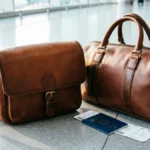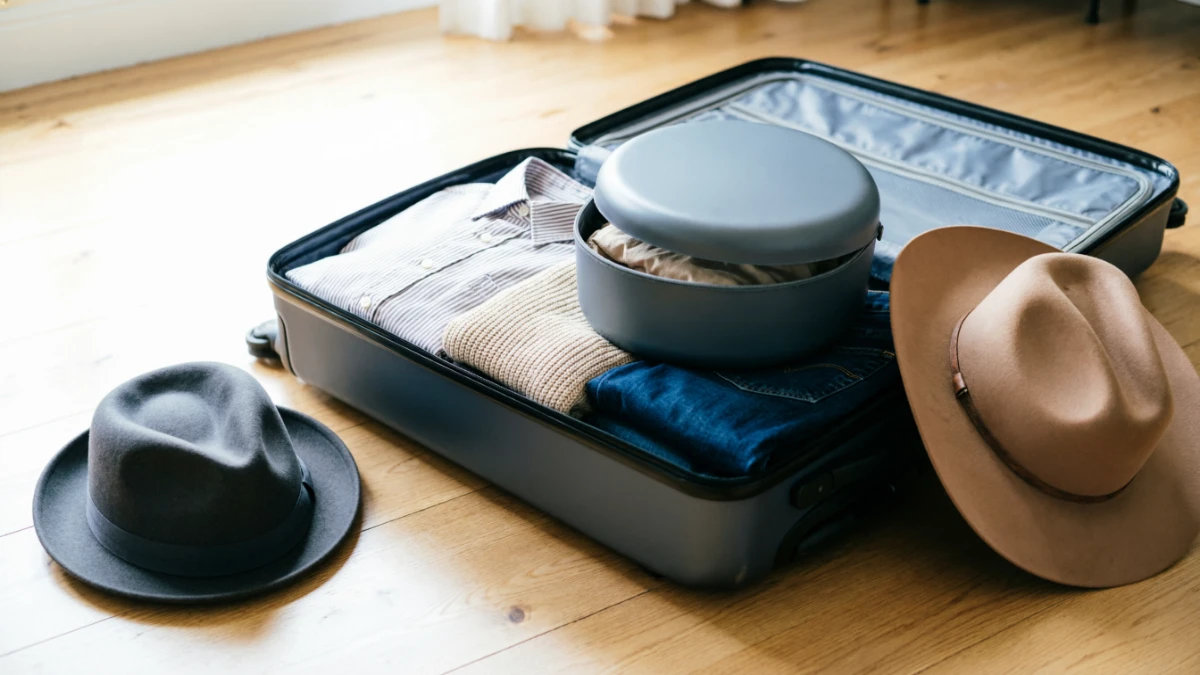
There’s nothing worse than pulling your favorite hat out of a suitcase and finding it flattened, bent, or crushed beyond recognition. A hat case for travel solves this exact problem by giving your hat a rigid, protected space of its own. If you’re flying with a wide-brim sun hat, a structured fedora, or a prized cowboy hat.
Millions of travelers pack hats every year, yet most airlines, TSA counters, and packing guides say almost nothing about how to actually protect them. This guide fills that gap. Below, you’ll find real answers on hat case types, TSA and airline rules, packing methods, and how to keep your hat looking new no matter where you’re headed.
Prices, airline policies, and product availability change often, so always confirm current details with your airline, TSA.gov, or the retailer before you travel.
Featured Snippet:
A good hat case for travel is a rigid, crush-proof container sized to your hat’s brim and crown, with a secure latch, a carry handle or strap, and enough internal room to prevent shape loss. The best options include hard-shell round cases, cowboy hat boxes, and packable brim protectors that fit in checked bags, carry-ons, or as a standalone item.
Quick Facts Table
| Hat Case Feature | Why It Matters |
| Hard-shell exterior | Prevents crushing in overhead bins or checked luggage |
| Adjustable interior | Fits multiple hat sizes and styles |
| Carry handle/strap | Makes it easy to carry as a personal item |
| Vented design | Reduces moisture buildup for felt or straw hats |
| Stackable shape | Saves space in car trunks or closets |
| TSA-friendly size | Fits carry-on dimension limits (varies by airline) |
This table gives you a quick checklist before buying any hat case, if it’s for a weekend trip or long-haul travel.
Hat Travel Case Lids
A hat travel case lid is the removable or hinged top that seals the case and keeps the crown from getting compressed during handling. Most quality cases use a snap-lock or twist-lock lid, and some higher-end cowboy hat boxes use double-latch lids for extra security on flights.
When shopping, look for lids with a tight seal but easy one-hand release, since fumbling with a case at airport security slows you down. A slightly domed lid also gives extra clearance for taller crowns like fedoras or cowboy hats.
Hat Cases for Display
Beyond travel, many hat cases double as display cases at home, featuring clear acrylic or mesh windows so you can store and showcase your hat collection. These are typically not meant for checked baggage since they’re less impact-resistant than hard-shell travel cases.
If you want one product for both travel and display, look for a hybrid hard-shell case with a clear top panel; itt protects your hat in transit and lets you see it on a shelf afterward.
Hat Travel Case Amazon
Amazon carries a wide range of hat travel cases, from budget-friendly plastic hat boxes under $20 to premium leather-trimmed cowboy hat cases over $100. Filtering by “hard-shell,” “adjustable interior,” or “TSA carry-on” in the search bar narrows results to travel-specific designs.
Before buying, check the listed interior dimensions against your hat’s brim width and crown height, and read recent reviews mentioning airline travel specifically, since fit and durability vary widely between sellers.
Cowboy Hat Case for Travel
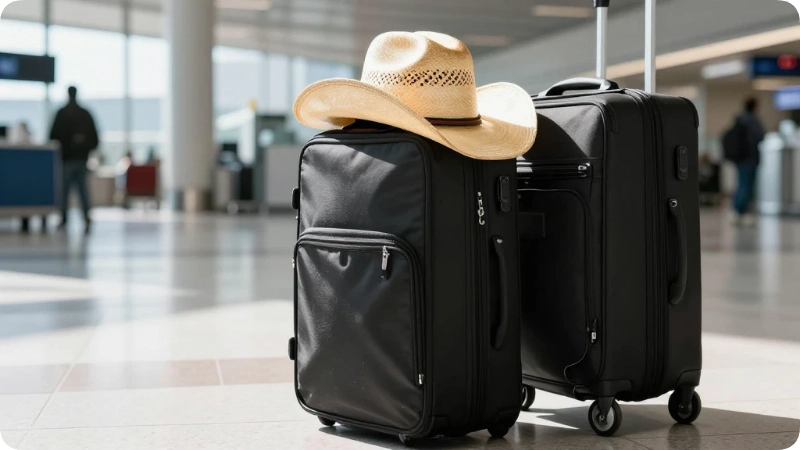
A cowboy hat case for travel is a taller, wider hard-shell case built to protect the deep crown and broad brim typical of Western hats. These cases are usually round or oval, made of durable ABS plastic or reinforced fiberglass, and often include an interior strap to hold the hat centered so it doesn’t shift mid-flight.
Tip: If you’re flying with a cowboy hat, check it as a standalone item rather than forcing it into an overhead bin, since most airlines will accept a properly cased hat as checked or gate-checked cargo.
Baseball Cap Travel Case
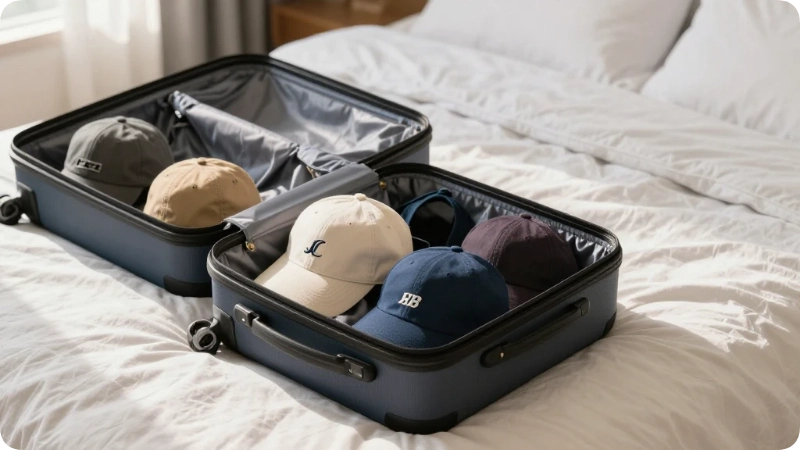
A baseball cap travel case is a smaller, often stackable container designed to keep the curved brim from bending flat. Many cap-specific cases use adjustable dividers so you can transport two or more caps without the brims rubbing against each other.
For frequent travelers with a growing cap collection, a multi-cap case is usually more practical than several single-cap boxes, since it saves luggage space and keeps caps organized by team, color, or trip.
2 Hat Travel Case
A 2-hat travel case is built with a dual-compartment interior or a stackable double-lid design so two hats can travel together without touching or crushing each other. These are popular with travelers packing one dress hat and one casual cap, or couples sharing luggage space.
When comparing 2-hat cases, check if the compartments are independently adjustable, since two hats of different sizes (like a fedora and a baseball cap) need separate support inside the same case.
Can You Take Hat Cases on a Plane?
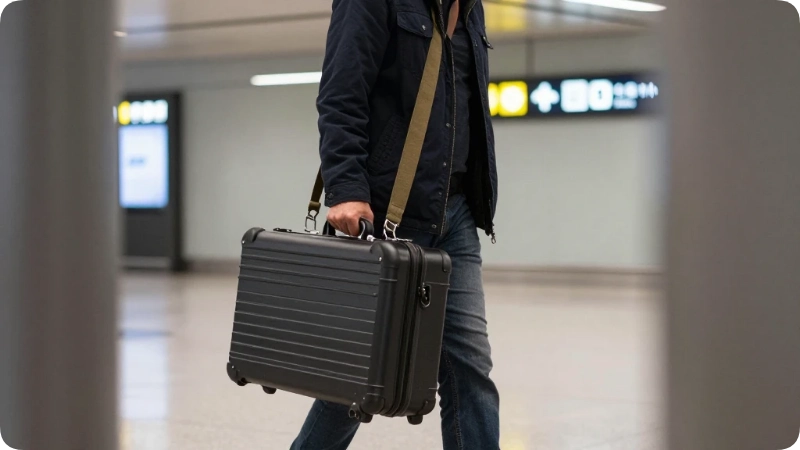
Yes, you can take hat cases on a plane, either as a carry-on, a personal item, or checked luggage, depending on the case size and your airline’s policy. Most standard hat boxes fall within personal-item or carry-on dimensions, but oversized cowboy hat cases may need to be checked or gate-checked.
Always verify size limits on your specific airline’s website before flying, since dimension allowances differ between airlines and even between domestic and international routes.
How to Store Hats When Traveling?
Store hats when traveling by placing them in a rigid case, stuffing the crown lightly with soft clothing (like socks or a T-shirt) to hold its shape, and keeping the case upright in your luggage. Avoid placing heavy items on top of or beside the case.
For hotel stays, use the closet shelf or a stable flat surface instead of leaving the hat loose on a bed or chair, where it can get sat on or knocked off.
What Is the Best Travel Hat for Travel?
The best travel hat is typically a packable, crushable style made from wool felt, soft straw, or technical fabric that springs back into shape after being folded or rolled. Popular choices include packable fedoras, foldable sun hats, and moisture-wicking ball caps.
Who it’s best for: travelers with limited luggage space or long walking itineraries. Who should avoid it: anyone needing a structured formal hat, since packable styles trade some shape retention for portability.
Can Hats Go in Carry-On Luggage?
Yes, hats can go in carry-on luggage, either worn, placed loosely on top of folded clothes, or packed inside a hat case that fits your airline’s carry-on size limits. Wearing your hat through security is also a common workaround that saves luggage space entirely.
If your hat case is bulky, some airlines count it as your personal item, so check the airline’s carry-on policy to avoid needing to check it at the gate.
What 7 Things Should You Not Wear on a Plane?
Common items experienced travelers avoid on flights include tight jeans, restrictive belts, high heels or sandals without back support, heavy jewelry, brand-new stiff shoes, strong perfume or cologne, and clothing with metal that triggers repeated security screening.
These choices are mostly about comfort and smooth security screening rather than strict rules, so there’s flexibility depending on personal preference and flight length.
What Is the Best Hat Bag for Travel?
The best hat bag for travel is a semi-rigid, padded bag with a structured base that resists crushing better than a soft tote but weighs less than a hard-shell case. These work well for short trips where a full hard case feels excessive.
Look for a hat bag with a drawstring or zip closure and a reinforced bottom panel, since flimsy fabric bags offer little real protection against compression in a packed suitcase.
What Is the Best Hat Organizer?
The best hat organizer for home or travel combines individual slots or hooks with breathable material to prevent moisture buildup, commonly seen in hanging closet organizers, stackable bins, or rotating hat racks. For travel specifically, a compartmentalized hard-shell case works best.
Underrated alternative: a mesh hanging shoe organizer repurposed for hat storage at home; it’s inexpensive and keeps hats visible and easy to grab.
How to Fly With a Hat?
To fly with a hat, either wear it through security and during boarding, or pack it in a rigid hat case as a carry-on or checked item. Wearing it avoids extra luggage entirely, while a case better protects structured or delicate hats from crushing.
TSA generally allows travelers to wear hats through the metal detector. However, an alarm may prompt an officer to ask you to remove the hat briefly for additional screening.
How to Keep a Cap in Luggage?
Keep a cap in luggage by placing it brim-down inside a rigid case or a cap clip organizer, and stuffing the crown gently with a soft item like socks to help it hold shape. Avoid folding the brim, which can leave a permanent crease.
If you don’t have a case, place the cap inside a shoe with the crown facing inward, then surround it with soft clothing for extra protection.
How to Pack a Hat in Luggage?
Pack a hat in luggage by placing it in a rigid case near the top of your suitcase, filling the interior with soft items to maintain shape, and avoiding placement under heavy objects like shoes or toiletry bags. This is the same core method Ififou’re using a hard case or an improvised solution.
If you’re short on space, you can roll packable or crushable hats and place them inside rolled clothing. However, use this method only with hats designed to spring back into shape.
What Is the Best Hat for European Travel?
The best hat for European travel is typically a packable, weather-adaptable style like a foldable wool fedora for cooler cities or a lightweight breathable sun hat for warmer Mediterranean destinations. Neutral colors tend to pair well with varied European travel wardrobes.
European trips often involve walking, train rides, and changing weather, so travelers usually find a packable hat more practical than a rigid formal style. You can easily stuff a packable hat into a daypack without taking up much space.
What Is the Most Popular Hat Right Now?
Popularity shifts by season and region, so instead of citing a specific unverified ranking, it’s more reliable to check current bestseller lists on major retailers or recent travel and fashion coverage for the latest trending styles. In general, packable bucket hats and structured baseball caps remain consistently popular for travel.
For the most accurate current answer, check a retailer’s “trending” or “bestseller” filter close to your travel date, since trends shift quickly.
Can I Bring a Hat Box on a Plane?
Yes, you can bring a hat box on a plane as a carry-on if it fits within your airline’s size limits, or as checked luggage if it’s larger, such as an oversized cowboy hat box. Airlines generally treat hat boxes like any other rigid container subject to standard baggage rules.
Confirm your specific hat box’s dimensions against your airline’s carry-on chart before departure to avoid a surprise gate-check requirement.
What Not to Wear Through Airport Security?
Avoid wearing excessive metal jewelry, belts with large metal buckles, boots that are difficult to remove quickly, and bulky layered outerwear through airport security, since these commonly trigger secondary screening. Hats are usually fine to wear through, though may occasionally require a quick removal for a visual check.
Wearing slip-on shoes and minimal metal accessories speeds up the screening process significantly.
How to Travel With a Fitted Hat?
Travel with a fitted hat by placing it in a rigid, correctly sized case since fitted hats have less flexibility than adjustable snapback styles and can lose shape permanently if bent. Avoid squeezing a fitted hat into a soft bag with other items.
Some fitted-hat cases include an internal foam ring specifically shaped to match standard fitted crown sizes, offering tighter, more secure protection.
Why Shouldn’t You Wear Jeans on a Flight?
Some travelers avoid jeans on flights because rigid denim can feel restrictive during long periods of sitting and doesn’t stretch for swelling that sometimes happens on long-haul flights. This is a comfort preference rather than an airline rule, and many travelers wear jeans without any issue.
Softer stretch-denim or joggers are common alternatives for travelers prioritizing comfort over style on longer routes.
Why Should You Avoid Seat 11A on a Plane?
Travelers have occasionally reported that seat 11A sits near engine or wing noise on some aircraft. On certain plane models, structural paneling may also block the window. This varies significantly by airline and aircraft type, so it’s not a universal rule.
Before booking, check your airline’s seat map tool or a seat-review site for your exact aircraft to confirm the layout for that specific flight.
What’s the Best Outfit to Wear on a Plane?
The best plane outfit typically combines breathable, layerable clothing, comfortable slip-on shoes, and minimal metal accessories to move through security quickly and stay comfortable during the flight. A structured hat can complete the outfit without needing to be packed, as long as it’s easy to remove for screening.
Layering also helps you adjust to changing cabin temperatures without needing to dig through carry-on luggage mid-flight.
How to Protect Hats When Traveling?
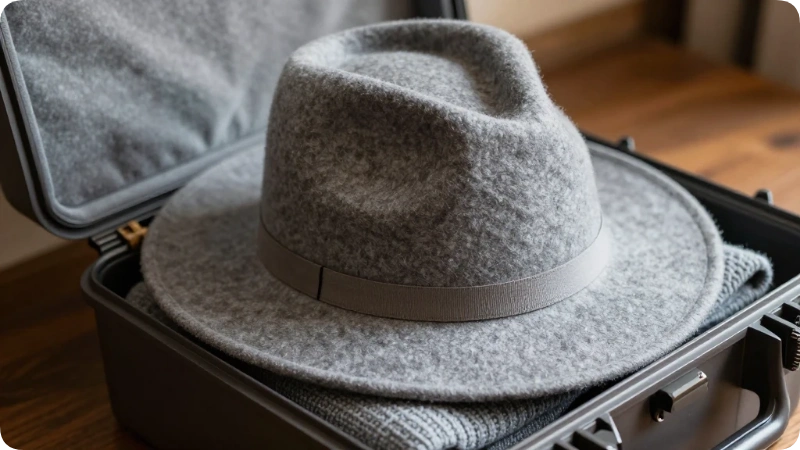
Protect hats when traveling by using a rigid case, avoiding placement under heavy luggage, keeping hats away from moisture, and choosing packable materials when a hard case isn’t practical. Consistently storing hats brim-up and crown-supported prevents most common travel damage.
Common mistake: tossing a hat loosely into a suitcase’s main compartment. Fix: always give it its own protected space, even if that’s just a repurposed shoebox lined with soft fabric.
How to Travel on a Plane With a Hat?
To travel on a plane with a hat, wear it through the airport, place it in an overhead bin inside a case, or pack it in checked luggage using a rigid protective container. Each method works, but wearing it or using a hard case offers the most reliable shape protection.
If gate-checking a hat case, ask the airline staff for a fragile tag, which flags the item for gentler handling by ground crew.
How Do I Pack a Packable Hat for Travel?
Pack a packable hat for travel by rolling or folding it according to the manufacturer’s instructions, usually along built-in fold lines, and storing it inside its included pouch or a soft fabric bag. Packable hats are specifically engineered to spring back into shape, unlike structured hats.
Avoid placing heavy items directly on top of even a packable hat, since prolonged pressure can still affect recovery time.
What Is a Hat Holder Called?
A hat holder is commonly called a hat rack, hat stand, hat case, or hat box, depending on whether it’s used for storage at home or protection during travel. “Hat case” specifically refers to portable, protective containers designed for transport.
Some travelers also use the term “crown protector” for smaller inserts placed inside luggage rather than a full standalone case.
How Do People Organize Hats?
People commonly organize hats using wall-mounted hooks, rotating closet racks, stackable bins, or labeled hard-shell cases for travel-ready collections. The right method usually depends on collection size and available closet space.
For frequent travelers, organizing hats in individual labeled travel cases makes it easy to grab the right one before a trip without searching through a closet.
Where Can I Buy a Hat Organizer?
Hat organizers are widely available through major online retailers, home goods stores, and luggage or travel specialty shops, both online and in physical locations across the USA. Comparing a few listings for material quality and interior padding helps ensure durability.
Checking return policies is worthwhile, since hat organizer fit can be hard to judge from photos alone.
Are Hats Allowed at Airports?
Yes, hats are allowed at airports and can typically be worn through security, checkpoints, and boarding without restriction, unless a specific hat sets off a metal detector alarm and requires a quick removal for inspection. There is no general ban on hats in TSA policy.
Some airports post updated security guidance on official TSA.gov pages, so checking there before a trip is a reliable way to confirm current screening procedures.
What Is the Hat Rule?
There isn’t a single universal “hat rule” at airports; TSA generally permits hats through security screening, though officers may ask travelers to briefly remove a hat if it triggers additional screening. Some individual venues or events may have separate hat policies unrelated to air travel.
For the most current and accurate guidance, check TSA’s official website or contact your departure airport directly before your trip.
How to Pack a Hat in Your Luggage?
Packing a hat in your luggage follows the same core principle as general hat packing: use a rigid case near the top of the bag, stuff the crown lightly to hold shape, and avoid pressure from heavier items. This applies if you’re using checked luggage or a carry-on suitcase.
If you’re combining a hat with other fragile travel items, placing the hat case in the center of the suitcase, surrounded by soft clothing, adds an extra layer of shock protection.
Common Mistakes When Packing Hats (and How to Fix Them)
Many travelers fold hats flat to save space, place them under heavy shoes or toiletry bags, or skip a case entirely, all of which lead to permanent shape damage. Fixing this is simple: always use a rigid case, keep hats near the top of your bag, and never fold structured brims.
A third common mistake is ignoring humidity, since straw and felt hats can warp in damp climates without proper ventilation, so a vented case is worth the investment for humid destinations.
Alternatives to a Dedicated Hat Case
If you don’t own a hat case, workable alternatives include a repurposed shoebox lined with soft fabric, a salad bowl placed crown-down inside luggage, or simply wearing the hat through the airport. These options work in a pinch but offer less consistent protection than a purpose-built case.
For frequent travelers, investing in an actual hat case pays off quickly by preventing repeated replacement costs from crushed hats.
FAQs
Is it worth buying a dedicated hat case for travel?
Yes, if you travel with structured or expensive hats regularly, a dedicated case is worth it because it prevents shape damage that’s often permanent. Occasional travelers with packable hats may not need one.
How long does a hard-shell hat case usually last?
A quality hard-shell hat case can last several years of regular travel if stored properly and not overloaded with excessive weight from stacked luggage.
What’s overrated when it comes to hat travel cases?
Extremely bulky, oversized cases often seem unnecessary for travelers who own soft, packable hats. A simple padded bag can offer enough protection while taking up less luggage space.
What’s underrated when it comes to protecting hats?
One simple habit can make a big difference: pack your hat first and place it near the top of your suitcase. This costs nothing and helps prevent common crushing damage during transit.
Do I need travel insurance for an expensive hat?
For high-value hats, checking if your travel insurance or luggage policy covers damaged personal items is worth doing, since standard airline liability for checked bags may not fully cover specialty items.
Can a hat case go through checked baggage without extra fees?
This depends on the airline’s size and weight policies for checked baggage, so it’s best to check your specific airline’s baggage page, since oversized cases may incur additional fees.
Should I buy a hat case in-store or online?
Buying online often gives more model choices and reviews, while in-store shopping lets you test the fit with your actual hat before purchasing, which can matter for oddly shaped brims.
CONCLUSION
Packing a hat doesn’t have to end in a crushed brim or bent crown. The right hat case for travel, paired with a few simple packing habits, keeps your hat looking sharp from departure to arrival. If you choose a hard-shell cowboy hat case, a compact cap organizer, or simply wear your hat through the airport, a little planning goes a long way.
Before your next trip, check your airline’s current carry-on and checked baggage policies, since rules and fees can change. Pack smart, protect your hat, and step off the plane ready for wherever the trip takes you next.

Stephen Fry brings an insatiable curiosity for history, language, and global heritage to the Travelmarse team. Having spent decades traveling the globe to study regional storytelling and ancient civilizations, he excels at uncovering the hidden narratives of modern destinations. Stephen anchors the cultural vertical on Travelmarse, where he writes deep-dive guides on architectural history, museum crawl strategies, and local customs. His vivid, engaging writing helps travelers look past the surface and truly understand the heritage of the places they visit.