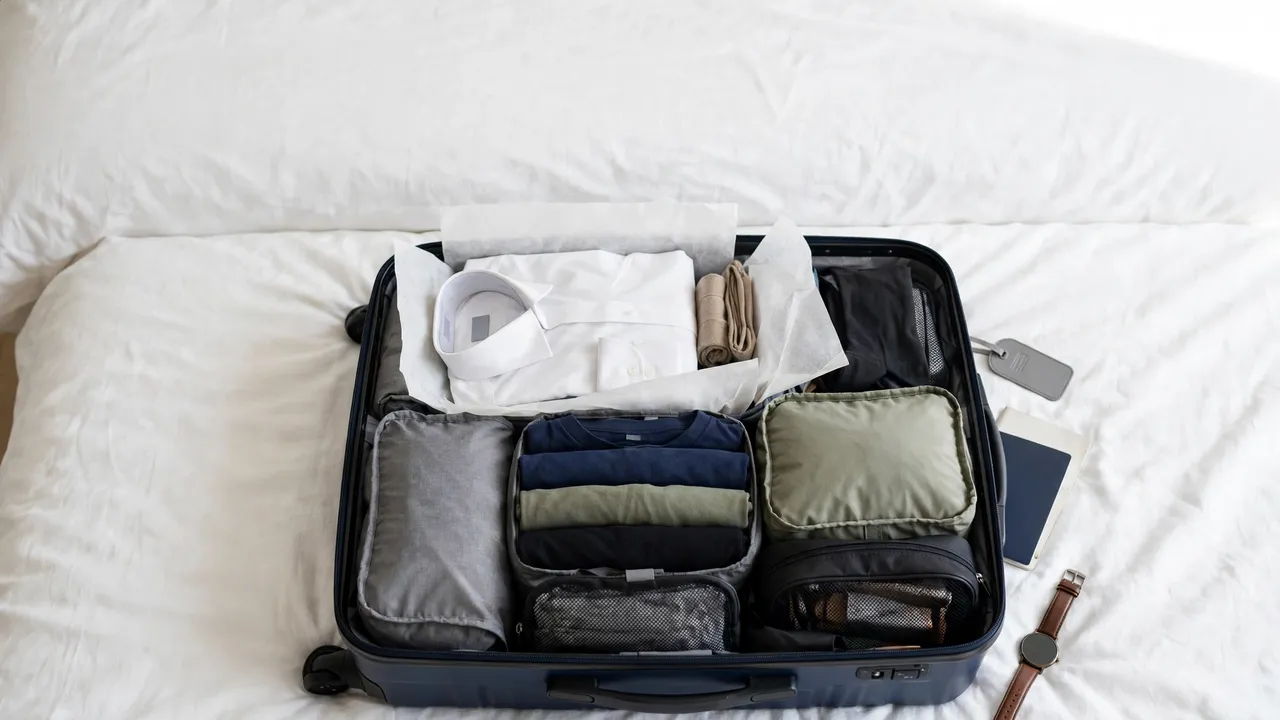
The best way to fold shirts for travel is to button the shirt, smooth it flat, fold the sleeves in, then fold the shirt in thirds. Add a layer of tissue or a dry-cleaning bag between folds. Place the shirt on top of your suitcase and keep it snug to stop shifting.
You open your suitcase at the hotel. Your favorite shirt looks like a crumpled paper bag. The meeting starts in thirty minutes, and the iron is broken.
Sound familiar? Wrinkled clothes are one of the most common travel headaches. The good news is that folding shirts for travel is a skill anyone can learn. Small changes in how you fold, stack, and pack can save space and keep fabric smooth.
This guide covers t-shirts, dress shirts, collared shirts, and long sleeves. You will also learn the Japanese folding method, the roll-versus-fold debate, and popular packing rules like 3-3-3. Let’s get your shirts to your destination looking fresh.
Feature Snippet:
To fold shirts for travel without wrinkles, button or zip the shirt, lay it flat, smooth out creases, fold the sleeves inward, and fold the shirt into thirds. Place tissue paper or a thin dry-cleaning bag between layers to reduce friction. Pack folded shirts near the top of your suitcase and keep them snug to prevent shifting. For casual T-shirts, rolling can save space, while dress shirts are usually better folded.
Quick Facts: Folding Shirts for Travel
The quickest answer is that the right method depends on the shirt. Soft cotton tees do well rolled or file-folded. Stiff dress shirts need flat folds. Use this table to pick fast.
| Shirt Type | Best Method | Wrinkle Risk | Time Needed |
|---|---|---|---|
| Cotton t-shirt | File fold or roll | Low | 10 seconds |
| Dress shirt | Flat tri-fold | High | 2 minutes |
| Collared polo | Flat fold, collar up | Medium | 1 minute |
| Long sleeve tee | Sleeves-in thirds | Medium | 30 seconds |
| Linen shirt | Loose fold, top layer | Very high | 1 minute |
Tip: Fabric matters as much as technique. Wool blends and synthetics often resist wrinkles better than linen or 100% cotton.
How to Fold a Shirt for Travel Wrinkle-Free
To fold a shirt for travel without wrinkles, lay it face down on a flat surface, smooth the fabric, fold the sleeves back, then fold the bottom up in thirds. Keep folds loose and avoid sharp creases. Pack it flat, not squeezed under heavy items.
Here is the simple version:
- Button the shirt and smooth out bumps with your hands.
- Lay it face down on a bed or table.
- Fold each side toward the center and tuck sleeves straight down.
- Fold the bottom hem up to the collar.
- Place it flat in your bag, near the top.
The fewer folds you make, the fewer lines you get. Wide, soft folds are better than tight, sharp ones.
How to Fold a T-Shirt
To fold a t-shirt, lay it flat, fold one side to the center, fold the sleeve back, then repeat on the other side. Fold the bottom up to the neckline. This makes a neat rectangle that stacks well and fits in packing cubes.
This basic fold is the base for most other tricks. Once you can do it, you can speed up with the hacks below. Practice twice at home, and it becomes second nature.
What Is the Best Way to Fold T-Shirts for Travel?
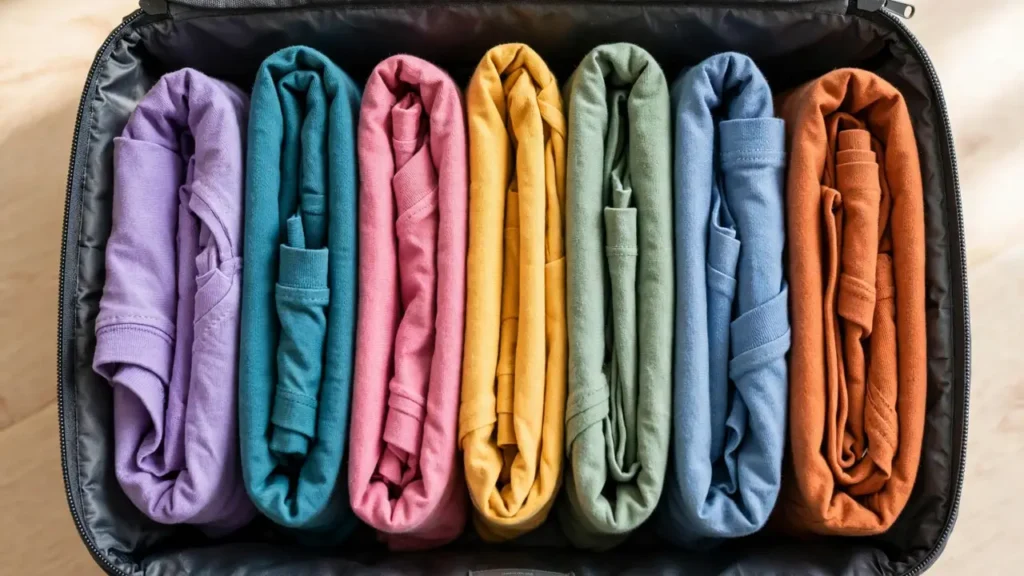
The best way to fold t-shirts for travel is the file fold. Make a small, tight rectangle, then stand each shirt on its edge like files in a drawer. You can see every shirt at a glance, and nothing gets crushed under the pile.
File folding also stops the “dig and mess” problem. You pull one shirt out and the rest stay
neat. It works great inside packing cubes or a carry-on from airlines like Delta, United, or Southwest.
What Is a Quick Hack for Folding a T-Shirt?
The quickest hack for folding a t-shirt is the pinch-and-flip method. Pinch the shirt at the shoulder and the middle of the hem, lift, then pull the two pinched points together. Lay it down, and fold once. It takes about three seconds.
It looks like magic the first time. Watch a short demo video, then try it on a shirt that is already flat. Slow hands at first are fine. Speed comes with practice.
How to Fold Your Shirt in 3 Seconds
To fold a shirt in 3 seconds, lay it flat, pinch the center of the shirt and one lower corner on the same side, then cross your hands. Pull the points out, flip the shirt over, and fold once. The sleeves tuck in on their own.
This works best on soft, stretchy shirts. Stiff dress shirts do not fold well this way, and you could add wrinkles instead. Save this trick for tees, hoodies, and kids’ clothes.
How to Fold a Dress Shirt for Travel So It Doesn’t Wrinkle
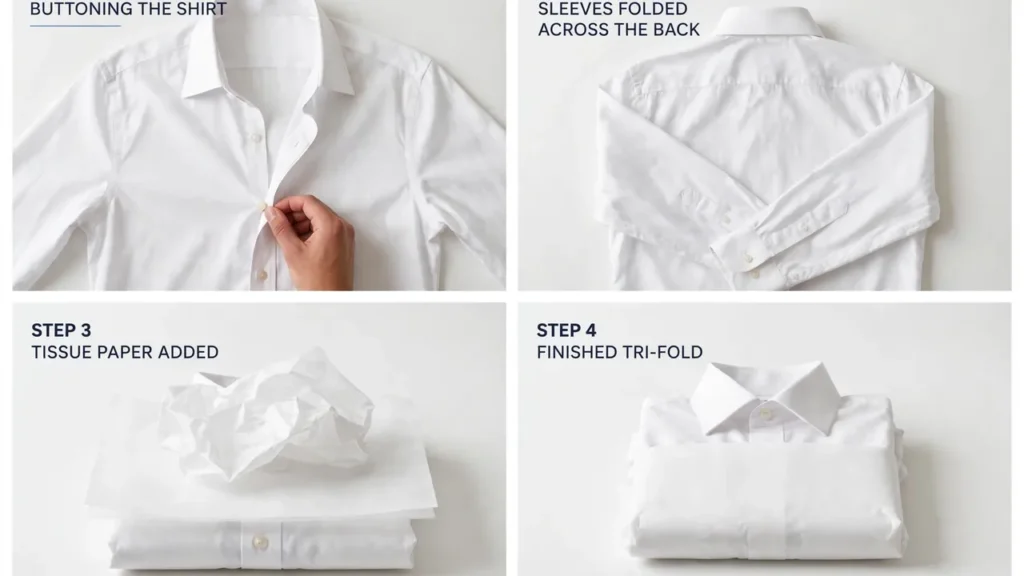
To fold a dress shirt without wrinkles, button it up, lay it face down, fold the sleeves across the back, then fold the shirt in thirds from the bottom. Slip a thin dry-cleaning bag or tissue inside the folds. Pack it flat on top of your clothes.
The tissue acts like a cushion. It lowers the friction between layers, which is what causes many creases. If you wear the shirt on arrival day, hang it in a steamy bathroom for ten minutes.
How to Fold a Collared Shirt for Travel
To fold a collared shirt, button the top and middle buttons, lay it face down, and fold the sleeves behind the back. Fold the bottom up to the collar. Place a rolled sock or a stiff collar stay inside the collar to hold its shape.
The collar is the first spot to crush. Keep the points flat and the collar facing up in the bag. A thin strip of cardboard inside the collar helps it keep its shape.
How to Fold a Shirt With a Collar (Polo and Button-Down)
For a polo or button-down, fold it just like a dress shirt, but use fewer folds. Soft polos can be folded in half, then in half again. Keep the collar on top so it does not bend inward.
Blend the two styles for the same trip. Roll your polos for packing cubes. Fold your button-downs flat. This simple mix gives each fabric what it needs.
How to Fold Long Sleeve Shirts for Travel Wrinkle-Free
To fold a long sleeve shirt, lay it face down, fold each sleeve straight across the back, then fold the bottom up in thirds. The sleeves stay inside the folds, so nothing hangs out. Pack it flat to avoid sleeve creases.
For thick items like flannel or sweaters, rolling can save space. For thin, smooth fabric, flat folds win. Fold sleeves across the back, not down the side. That one change prevents lines on the front.
Best Folding Methods for Shirts When You Travel
The best folding methods for travel shirts are the flat tri-fold for dress shirts, the file fold for tees, and the bundle method for wrinkle-prone fabrics. Each method protects a different fabric type, so most travelers use two or three.
- Flat tri-fold: Best for button-downs and blouses.
- File fold: Best for t-shirts and tank tops.
- Roll: Best for knit tops and athletic wear.
- Bundle wrap: Best for linen and silk.
Which Folding Method Is Best for Shirts?
The best folding method for shirts is the one that matches the fabric. Use flat folds for crisp dress shirts and rolls or file folds for soft knits. No single method wins for every shirt, but flat folds usually give the smoothest result.
Here is the honest trade-off. Rolling saves space but can leave soft curl lines. Flat folding takes more room but keeps crisp shirts looking smart. Choose based on what matters most on your trip.
Is It Better to Roll or Fold Clothes When Traveling?
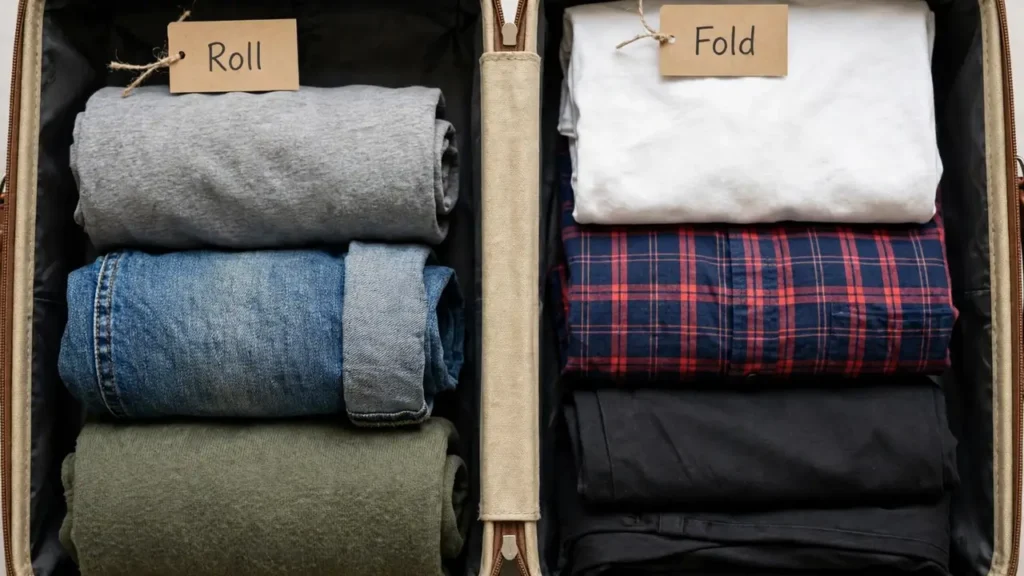
It depends on the clothes. Rolling saves space and works well for t-shirts, jeans, and knits. Folding keeps dress shirts, blazers, and stiff fabrics smoother. Many experienced travelers do both: roll casual items and fold formal ones.
Roll when: you pack stretchy fabric, need space, or use packing cubes.
Fold when: you pack formal wear, wrinkle-prone fabric, or you open the bag in a business setting.
A mixed approach is practical, and it matches what most packing guides suggest.
Which Is Better, Packing Cubes or Rolling Your Clothes?
Packing cubes and rolling work best together. Cubes keep clothes organized and compressed, while rolling saves space inside each cube. If you must pick one, packing cubes help most with organization, and rolling helps most with space.
Cubes also make airport bag checks simpler. You can lift one cube out and put it back. Compression cubes squeeze air out, but too much squeezing can set wrinkles, so use light compression for dress clothes.
How Do Japanese Fold Their Clothes? (Japanese Folding Clothes for Packing)
The Japanese method, often linked to Marie Kondo’s KonMari system, folds clothes into small, flat rectangles that stand upright. Fold the shirt in half lengthwise, then in thirds. Each piece stands on its edge like a book on a shelf.
To try it:
- Lay the shirt flat and fold both sides to the middle.
- Fold the sleeves back to form a long rectangle.
- Fold the rectangle in half, then in half again until it stands up.
This method works great in packing cubes and drawers. It is not the best for dress shirts because tight folds can crease stiff fabric.

Folding Clothes for Travel Video
A short video is the fastest way to learn a fold. Search for “how to fold a shirt for travel” on YouTube and pick a clip under three minutes that shows the fold from above. Pause, copy each step, and replay slowly.
Look for videos that show real shirts, not stiff display clothes. Also pick creators who show the finished bag, because they prove the fold survives a trip. Practice with an old shirt before you pack your good ones.
How to Fold Clothes: Simple Tricks That Work
The easiest fold-clothes trick is to smooth fabric flat before every fold. Pull out seams, close zippers and buttons, and make each fold the same width. Neat, even folds stack cleanly and keep wrinkles low.
Three quick tricks:
- Use a folding board: A piece of cardboard (about 8 x 11 inches) gives every shirt the same size.
- Fold on a hard surface: A bed is too soft and makes crooked folds.
- Stack by weight: Heavy items go on the bottom, delicate shirts on top.
What Are Some Hacks for Folding Clothes When Traveling?
The best travel folding hacks are the tissue-paper layer, the dry-cleaning bag wrap, and the bundle method. They cut friction between fabrics, which is what causes most creases. Each hack costs almost nothing and adds almost no weight.
- Tissue layer: Place acid-free tissue between folds.
- Dry-cleaning bag: Wrap the shirt in thin plastic. Many travelers say it cuts wrinkles.
- Bundle wrap: Wrap clothes around a soft core, such as a pouch of socks.
- Shirt boards: Use a cardboard insert for dress shirts.
How to Keep a Shirt From Wrinkling While Traveling?
To keep a shirt from wrinkling while traveling, pick wrinkle-resistant fabric, fold it loosely, and pack it flat on top. After arrival, hang it right away. A steamy bathroom or a travel steamer can relax light creases in minutes.
Smart extras:
- Pick merino wool, polyester blends, or performance fabric.
- Pack a small wrinkle-release spray (check TSA liquid rules for carry-on).
- Skip overpacking. A tight suitcase presses wrinkles in.
- Unpack within an hour of arrival.
What Clothes Should Not Be Folded?
Clothes that crease easily or hold a shape should not be folded tightly. These include structured blazers, silk blouses, linen suits, formal dresses, and delicate knits. Use a garment bag, a loose roll, or a bundle wrap instead.
Also skip hard folds on pleated skirts and clothes with beads or sequins. If a piece costs a lot or matters for a big event, wear it on the plane or carry it in a garment bag on a hanger.
How to Pack T-Shirts for Travel
To pack t-shirts for travel, file-fold or roll them, then place them in packing cubes or along the bottom of your bag. Pack 1 shirt per day for short trips, and plan to rewear shirts or wash them on longer trips.
Pick shirts in matching colors so each one pairs with several bottoms. Neutral tones such as black, gray, navy, and white give you more outfits with fewer shirts.
What Is the Most Efficient Way to Pack Clothes?
The most efficient way to pack clothes is to plan a small capsule wardrobe, roll soft items, flat-fold formal items, and use packing cubes. Pack heavy items near the wheels. Wear your bulkiest shoes and jacket on the flight.
Before you pack, lay everything on the bed. Then remove one-third. Most travelers pack more than they need, and a lighter bag is easier to carry.
What Is the 3-3-3 Rule for Travel Packing?
The 3-3-3 rule is a simple capsule plan: pack three tops, three bottoms, and three pairs of shoes (or three layers, in some versions). Mix and match them to create many outfits. It keeps your bag light and your choices easy.
The rule is a guide, not a law. Add underwear, sleepwear, and swimwear on top. Adjust for the weather and trip length.

What Is the 5-4-3-2-1 Packing Method?
The 5-4-3-2-1 method is a packing checklist. A common version is five tops, four bottoms, three pairs of shoes, two accessories, and one special item such as a hat or swimsuit. Versions vary, so treat it as a starting point.
It works well for week-long trips. For a beach trip, swap the special item for a swimsuit or cover-up. For a business trip, swap one top for a dress shirt.
What Is the 9-Item Packing Method?
The 9-item packing method builds a small travel wardrobe around nine clothing pieces that all mix together. It is a capsule wardrobe idea for light travelers. Exact lists differ by source, so build yours around the trip’s weather.
A sample plan: three tops, three bottoms, and three layers, such as a jacket, cardigan, and light sweater. Pick one color palette so every piece matches every other.
What Are the 5 Biggest Packing Mistakes to Avoid?
The five biggest packing mistakes are overpacking, packing too many shoes, ignoring the weather, forgetting chargers and medicine, and cramming shirts in tightly. Each one wastes space or causes stress on the road. Each has a simple fix.
- Overpacking: Pack for 7 days, then do laundry.
- Too many shoes: Bring two pairs at most: one casual, one dressy.
- Ignoring weather: Check the forecast for every city on your trip.
- Forgetting essentials: Keep chargers and medicine in your carry-on.
- Cramming shirts: Fold loosely and leave room at the top of the bag.
What Is the Most Forgotten Item When Packing for Vacation?
The most forgotten items are phone chargers, medications, and toiletries. Travelers also often leave behind sunglasses, portable power banks, and adapters. Keep a packing list on your phone and check it off while you pack.
Put your charger and medicine in your carry-on bag. Then set a reminder for the night before. If you leave something behind, most destinations sell basics, but a missed prescription is harder to fix.
What Should You Never Pack in Checked Luggage?
Never pack medications, passports, cash, jewelry, or electronics in checked luggage. Lithium batteries and power banks must go in your carry-on, based on Federal Aviation Administration (FAA) rules. Always confirm current rules at tsa.gov before you fly.
Also keep your house keys, laptop, and any important documents with you. Checked bags can be delayed or lost. A small carry-on with essentials protects you if that happens.
What Are 10 Must-Have Travel Essentials?
Ten must-have travel essentials are a government ID or passport, phone and charger, medications, wallet and cards, a power bank, a refillable water bottle, comfortable shoes, a toiletry kit, a light jacket, and travel insurance details.
A few more notes:
- Carry copies of your ID, insurance, and bookings.
- Leave space in your bag for souvenirs.
- Keep snacks and a bottle of water for the trip.
FAQs
How many shirts should I pack for a one-week trip?
For a one-week trip, pack five to seven shirts, depending on the weather and laundry access. Choose tops that pair with most of your bottoms. If your hotel offers laundry, you can pack even fewer and rewear items.
Do packing cubes really prevent wrinkles?
Packing cubes do not stop wrinkles by themselves, but they hold clothes in place so they do not shift and crease. Fold or roll neatly first, avoid over-compressing, and do not overstuff each cube.
Can I fold a shirt the night before and still avoid wrinkles?
Yes, folding the night before is fine if you pack right away and keep folds loose. Lay the shirt flat, add tissue between layers, and place it on top. Do not press heavy items on it.
Is it okay to iron or steam shirts at the hotel?
Yes, most hotels offer irons and steamers, or they will provide them on request. A quick steam works well on light creases. Hanging the shirt in a steamy bathroom for ten minutes also helps in a pinch.
What is the best travel shirt fabric for fewer wrinkles?
Merino wool, polyester blends, and performance fabrics wrinkle less than linen or 100% cotton. Look for labels like “wrinkle-resistant” or “travel-friendly.” Always check the fabric tag and wash instructions before you buy.
Conclusion
Folding shirts for travel gets easier with a little practice. Remember these three takeaways:
- Match the fold to the fabric: flat folds for dress shirts, file folds or rolls for tees.
- Use tissue or a bag: a simple layer cuts friction and keeps shirts smooth.
- Pack shirts on top: keep them flat, snug, and easy to reach.
Before your next trip, spend ten minutes practicing at home. Then check your airline’s baggage rules and the TSA website, and consider travel insurance for peace of mind. Your next adventure is waiting, and you will arrive looking sharp.

Stephen Fry brings an insatiable curiosity for history, language, and global heritage to the Travelmarse team. Having spent decades traveling the globe to study regional storytelling and ancient civilizations, he excels at uncovering the hidden narratives of modern destinations. Stephen anchors the cultural vertical on Travelmarse, where he writes deep-dive guides on architectural history, museum crawl strategies, and local customs. His vivid, engaging writing helps travelers look past the surface and truly understand the heritage of the places they visit.