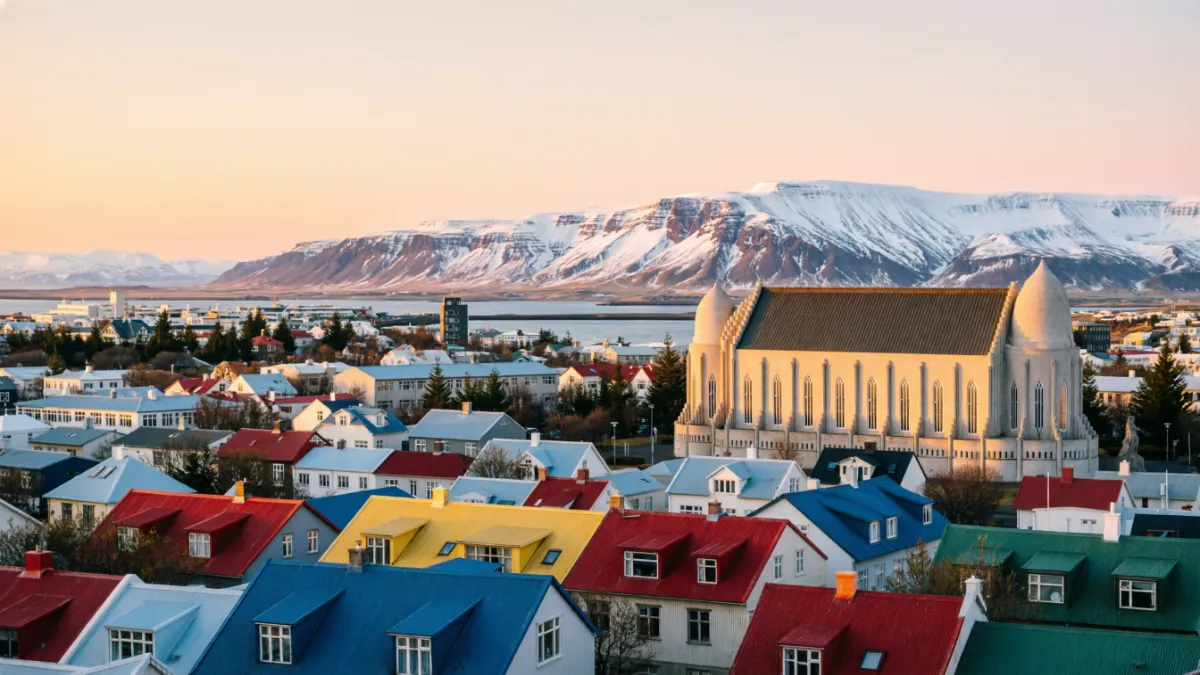
Picking where to stay in Iceland can make or break a trip. Book the wrong base and you’ll spend half your vacation driving in the dark instead of chasing waterfalls or the northern lights. Iceland’s dramatic landscapes are spread across a country the size of Kentucky, and accommodation options thin out fast once you leave Reykjavik.
This guide breaks down exactly where to stay in Iceland by region, trip length, season, and travel style from first time visitors to families, northern lights chasers, and road trippers planning a full week around the Ring Road. You’ll also find real budget ranges, common booking mistakes, and answers to the questions travellers ask most before locking in a hotel.
Featured Snippet:
Where is the best place to stay in Iceland? The best area depends on your itinerary and travel style. Reykjavik is best for first-time visitors and city access, the South Coast for waterfalls and glaciers, Akureyri for northern Iceland adventures, and rural areas for northern lights viewing. Road trippers should choose multiple bases to explore the Ring Road efficiently.
Quick answer:
Most travellers should split their trip between Reykjavik (culture, nightlife, easy airport access) and the South Coast (waterfalls, black sand beaches, glaciers). Add the Golden Circle, Snæfellsnes Peninsula, or North Iceland if you have more than 5 days. First timers with under a week should base mainly in Reykjavik and take day trips.
Quick Facts Table: Where to Stay in Iceland at a Glance
| Region | Best For | Nights Recommended | Vibe |
| Reykjavík | First timers, nightlife, culture | 2 4 | Colorful capital, walkable |
| South Coast (Vík, Hella, Selfoss) | Waterfalls, glaciers, black beaches | 2 3 | Dramatic, rural |
| Golden Circle (Selfoss, Laugarvatn) | Geysers, day trippers | 1 2 | Convenient, scenic |
| Snæfellsnes Peninsula | “Iceland in miniature” | 1 2 | Coastal, quiet |
| North Iceland (Akureyri) | Northern lights, less crowds | 2 3 | Small town, cozy |
| East Fjords | Solitude, hiking | 1 2 | Remote, wild |
| Westfjords | Off the beaten path adventure | 2 3 | Isolated, rugged |
Bold takeaway: There is no single “best” place to stay in Iceland the right base depends entirely on your trip length and travel style.
What Part of Iceland Should You Stay In?
The part of Iceland you should stay in depends on your priorities: choose Reykjavík for convenience and culture, the South Coast for waterfalls and glaciers, Snæfellsnes for a compact nature packed detour, or North Iceland for fewer crowds and strong northern lights odds.
Most itineraries under a week work best anchored in the southwest, since that’s where the highest concentration of famous sights sits. Longer trips (8+ days) can justify circling further around the Ring Road toward Akureyri and the East Fjords.
Think of your base as a hub and spoke system rather than one fixed hotel. Many travelers change accommodation every 1 2 nights as they move along the Ring Road, which keeps driving times shorter and daylight hours more useful.
Where to Go for Your First Time in Iceland
First time visitors should prioritize Reykjavík, the Golden Circle, and the South Coast, since these three areas hold the majority of Iceland’s most photographed attractions within a few hours’ drive of Keflavík Airport. This route is often called the “Golden Triangle.”
A typical first timer route looks like this: fly into Keflavík, spend 2 3 nights in Reykjavík, then drive the South Coast toward Vík for 2 more nights, stopping at Seljalandsfoss, Skógafoss, and Reynisfjara black sand beach along the way.
If you have extra days, tack on Snæfellsnes Peninsula for glaciers and fishing villages without the long drive to North Iceland. It delivers a taste of the Ring Road experience in a fraction of the time.
Is 7 Days in Iceland Enough?
Yes, 7 days is enough to comfortably cover the South Coast, Golden Circle, and Reykjavík, with room left for a detour to Snæfellsnes or a South Coast glacier hike. It is not quite enough to circle the entire Ring Road without long, tiring driving days.
A week gives you roughly 5 6 usable travel days once arrival and departure are factored in. That’s plenty for the southwest highlights, but attempting the full 830 mile Ring Road in that window usually means 4+ hours of daily driving and very few stops.
Bold takeaway: For a relaxed week, stick to the southwest. For a full Ring Road loop, budget 9 10 days minimum.
Where to Stay in Iceland for a Week
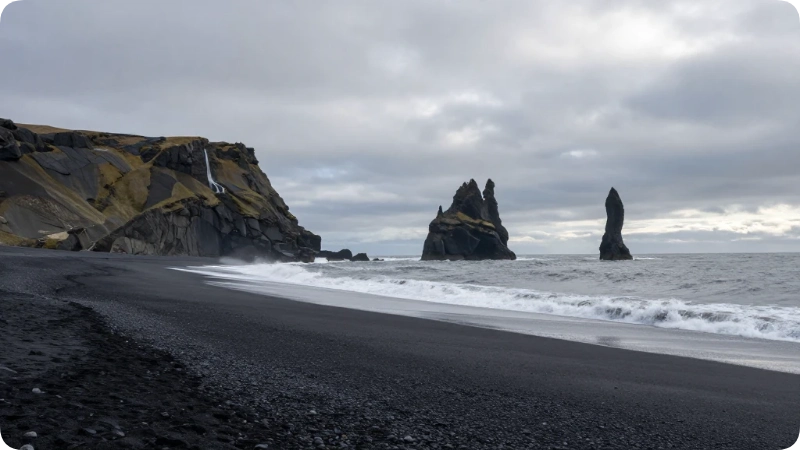
For a 7 day trip, stay 3 nights in Reykjavík, 2 3 nights along the South Coast (Vík or Hella), and 1 2 nights near Snæfellsnes or the Golden Circle. This layout minimizes backtracking while covering Iceland’s most requested sights.
Sample 7 day base plan:
- Nights 1 3: Reykjavík (city, Golden Circle day trip, Blue Lagoon or Sky Lagoon)
- Nights 4 5: Vík or Hella (South Coast waterfalls, glacier lagoon day trip)
- Nights 6 7: Snæfellsnes Peninsula or back to Reykjavík area for a slower final stretch
Booking accommodation in this order also means shorter drives between stops generally under two hours per leg which matters in winter when daylight is limited.
Is It Better to Stay in Reykjavík or Keflavík?
Reykjavík is better for most travelers, since it offers restaurants, museums, nightlife, and walkable neighborhoods, while Keflavík is a small airport town with limited dining and attractions. Keflavík only makes sense for a single night around a very early or late flight.
Keflavík International Airport sits about 45 minutes from downtown Reykjavík. Staying near the airport can save time if you land late at night or have a flight before 7 a.m., but you’ll trade that convenience for a much quieter, less scenic evening.
Practical tip: Book one Keflavík area hotel only on your arrival or departure night, and spend the rest of your trip in Reykjavík proper or out on the Ring Road.
Where to Stay in Iceland: Reykjavik Neighbourhoods
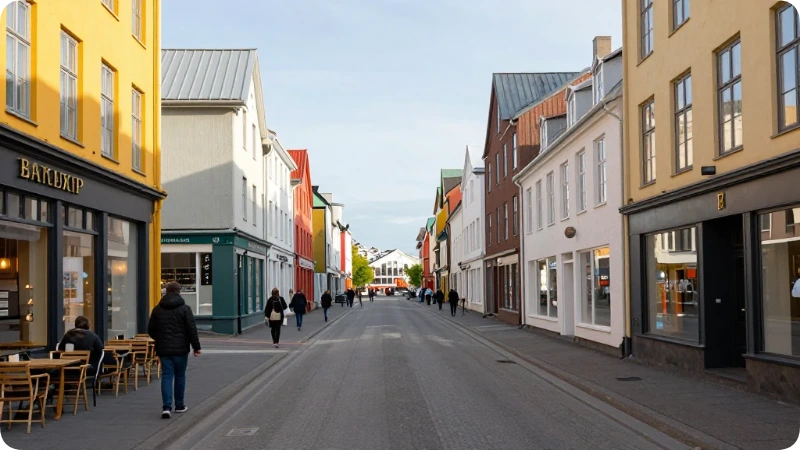
Reykjavík’s best neighborhoods for visitors are Old Reykjavík (101 downtown) for walkability, Grandi/Old Harbour for a quieter, trendy vibe, and Hlemmur/Laugavegur for budget friendly stays near restaurants and shops.
- 101 Downtown: Closest to Hallgrímskirkja church, Laugavegur shopping street, and the harbor. Best for first timers who want everything walkable.
- Old Harbour (Grandi): Home to design studios, seafood restaurants, and whale watching tours; slightly quieter at night.
- Hlemmur area: More budget hotels and hostels, still a 10 15 minute walk to the center.
Parking downtown is limited and metered, so if you’re renting a car for a South Coast leg afterward, check If your hotel includes parking before booking.
What Is the Prettiest Part of Iceland?
Many travelers and locals consider the Westfjords and the South Coast among the most scenic parts of Iceland, thanks to dramatic fjords, waterfalls, and black sand beaches, though “prettiest” ultimately depends on personal taste some prefer the volcanic drama of the South, others the untouched quiet of the Westfjords.
The South Coast wins for accessibility: Seljalandsfoss, Skógafoss, and Reynisfjara are all reachable within a few hours of Reykjavík. The Westfjords require more driving and time but reward visitors with fewer crowds and jaw dropping coastal scenery, including Dynjandi waterfall.
Honest drawback: The Westfjords’ beauty comes with a trade off gravel roads, sparse services, and long driving stretches that aren’t ideal for a first time or short trip.
How Many Nights in Iceland Is Enough?
5 7 nights is generally enough to see Iceland’s core highlights without feeling rushed, while 9 12 nights allows for a full Ring Road circuit including the North and East Fjords.
- 3 4 nights: Reykjavík, Golden Circle, and one South Coast day trip only.
- 5 7 nights: Southwest highlights plus Snæfellsnes or a deeper South Coast push to Jökulsárlón.
- 9 12 nights: Full Ring Road loop with time in Akureyri and the East Fjords.
- 14+ nights: Relaxed pace with room for Westfjords or extended hiking.
Worth it? Even a short 4 night trip is worth it for the South Coast and Golden Circle alone but travelers chasing the Ring Road’s full variety should aim for at least 9 nights.
Where to Stay in Iceland for Northern Lights
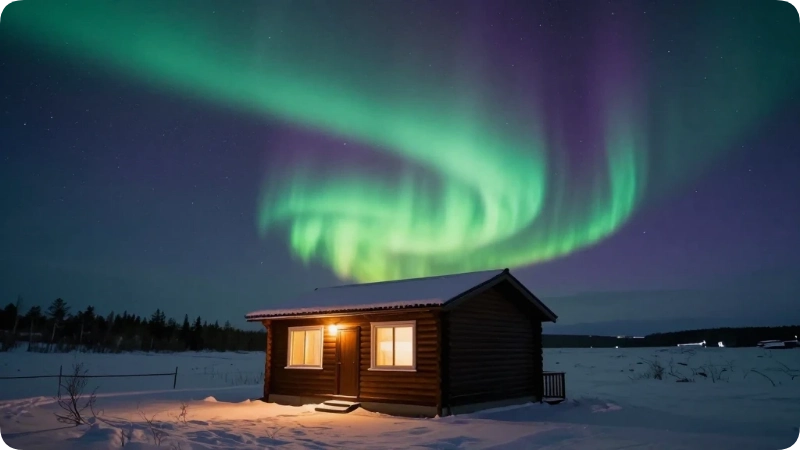
For the best northern lights viewing, stay somewhere with low light pollution and dark, open sky views, such as the Snæfellsnes Peninsula, South Coast countryside hotels, or North Iceland near Akureyri, rather than downtown Reykjavík.
Northern lights season generally runs from late August through mid April, with the darkest, longest nights in October through March. Rural guesthouses and countryside hotels along the South Coast or near Vík often have unobstructed horizon views right from the parking lot.
Insider tip: Ask your accommodation if they offer a wake up call service for aurora sightings many rural hotels in Iceland do this as a standard courtesy during peak season.
Crowd avoidance tip: Skip organized aurora bus tours from Reykjavík when possible; staying rurally means you can simply step outside instead of driving 30 45 minutes each way.
Where to Stay in Iceland Near the Blue Lagoon
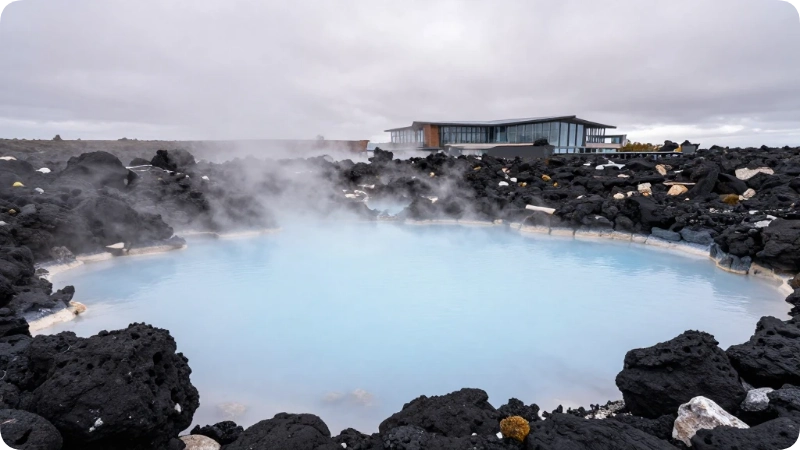
To stay close to the Blue Lagoon, book accommodation in Grindavík, Reykjanesbær, or near Keflavík Airport, all within a roughly 20 minute drive of the lagoon, or choose the on site Silica Hotel or Retreat Hotel for direct spa access.
The Blue Lagoon sits on the Reykjanes Peninsula, closer to Keflavík Airport than to downtown Reykjavík, making it a convenient stop right after landing or right before flying home rather than a separate overnight base for most itineraries.
Flag for verification: The Reykjanes Peninsula has experienced periodic volcanic activity in recent years, which has occasionally caused temporary closures or schedule changes at the Blue Lagoon. It has reopened after each event, but always check the official Blue Lagoon website and road.is for current status before you go.
Where to Stay in Iceland in Winter
In winter, prioritize accommodation in Reykjavík or larger towns like Akureyri and Selfoss with plowed roads and easy access to services, rather than remote countryside stays that depend on driving icy mountain passes after dark.
Daylight in December can be as short as 4 5 hours, so basing yourself centrally cuts down on nighttime driving. Many South Coast attractions remain accessible via Route 1, which is well maintained, but side roads and highland routes typically close for the season.
3 tourist mistakes + fixes:
- Mistake: Booking a remote countryside cabin with no cell signal. Fix: Choose lodging in or near a town with services during winter months.
- Mistake: Underestimating driving time in snow. Fix: Add 30 50% extra time to any winter drive estimate.
- Mistake: Skipping travel insurance. Fix: Winter road closures are common insurance that covers trip interruption is worth it.
Where to Stay in Iceland with Kids
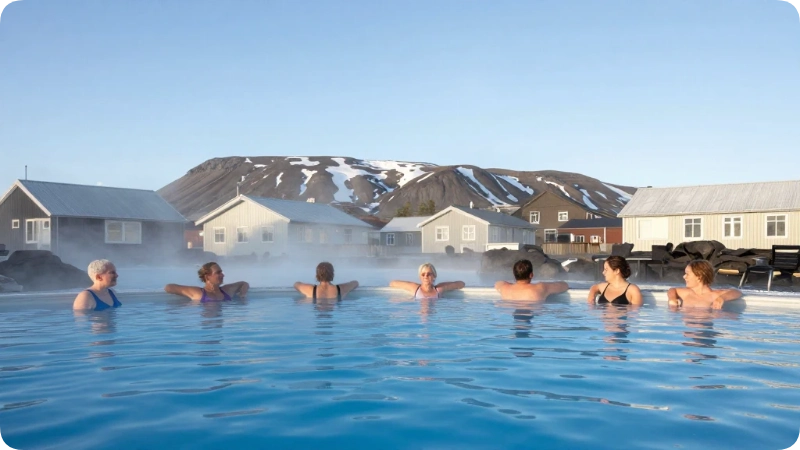
Families with kids should base in Reykjavík or family friendly South Coast towns like Hella and Selfoss, which offer swimming pools, shorter drive times between stops, and easier access to restaurants and pharmacies than remote countryside lodges.
Iceland’s geothermal swimming pools are a hit with kids and found in nearly every town, making pool adjacent hotels a smart pick. Family apartments or guesthouses with kitchens also help control costs and mealtimes on the road.
Underrated tip: Look for accommodation with a hot tub or geothermal pool on site it turns a long driving day into a fun evening instead of just a place to sleep.
Where to Stay in Iceland: What Reddit Travelers Recommend
Iceland travel communities on Reddit consistently recommend splitting nights between Reykjavík and the South Coast for short trips, and warn against booking too many one night stays, which eats up time packing and unpacking the car.
Common Reddit advice includes booking guesthouses or Airbnb style apartments outside the city center to save money, prioritizing accommodations with free parking and breakfast included, and reading recent reviews carefully since small guesthouses can change ownership or quality quickly.
Reminder: Crowdsourced advice is a helpful starting point, but always cross check current pricing and availability directly with hotels or official tourism sites, since forum recommendations can go out of date.
Budget Breakdown by Region
| Region | Budget Range (per night, double room) | Notes |
| Reykjavík | Higher end, most variety | Widest range of hotels, hostels, apartments |
| South Coast towns | Mid range | Fewer options, book early in peak season |
| Snæfellsnes | Mid range | Limited guesthouses, book ahead |
| North Iceland (Akureyri) | Mid range | Best value outside the capital |
| Westfjords | Mid to lower availability | Fewer choices, book far in advance |
Money saving tip: Guesthouses with shared bathrooms and apartments with kitchens are noticeably cheaper than hotels and let you cook, which cuts down on Iceland’s high restaurant prices.
Time saving tip: Book accommodations along your driving route in order, rather than jumping between regions, to avoid backtracking.
Prices fluctuate by season and demand always verify current rates directly with hotels or booking platforms before finalizing your itinerary.
Common Mistakes When Choosing Where to Stay in Iceland
- Booking only in Reykjavík for a full week. Fix: Split nights so you’re not driving 3+ hours round trip every day.
- Ignoring driving distances between stops. Fix: Map driving times first, then choose accommodation along that route.
- Assuming rural areas have full amenities. Fix: Confirm parking, breakfast, and cell coverage before booking remote guesthouses.
3 underrated alternatives: Hella and Hvolsvöllur (South Coast towns with fewer crowds than Vík), Borgarnes (a quiet gateway to Snæfellsnes and West Iceland), and Húsavík (a whale watching base that doubles as a peaceful North Iceland stay).
FAQs
Where is the best area to stay in Iceland for first time visitors?
Reykjavík is the best base for first timers, thanks to its central location, restaurants, and easy day trips to the Golden Circle and South Coast without long drives.
Do I need to book accommodation in advance in Iceland?
Yes, especially in summer and around the winter holidays, since Iceland has limited lodging outside Reykjavík and popular towns can sell out weeks ahead.
Is it cheaper to stay in Reykjavík or the countryside?
Countryside guesthouses are often slightly cheaper than central Reykjavík hotels, but savings can be offset by needing a rental car and driving further for meals and services.
Can I see the northern lights from Reykjavík?
Yes, but city lights reduce visibility. For a stronger chance, stay somewhere with darker skies just outside the city or along the South Coast and North Iceland.
How far in advance should I book hotels near the Blue Lagoon?
Book Blue Lagoon area hotels and the lagoon entry itself several weeks ahead, since time slots and rooms near Keflavík Airport fill up quickly, especially around flight times.
Should I stay in one hotel or move around Iceland?
For trips longer than 5 days, moving between 2 3 bases is usually better than one fixed hotel, since it cuts driving time and gets you closer to more attractions.
What’s the most overrated and underrated place to stay in Iceland?
Central Reykjavík hotels near the busiest tourist strip can be overrated for the price. Smaller South Coast towns like Hella are underrated for offering similar access with fewer crowds and lower rates.
CONCLUSION
Choosing where to stay in Iceland comes down to three things: your trip length, the season, and how much driving you’re willing to do each day. Reykjavik anchors nearly every itinerary, the South Coast rewards travellers with Iceland’s most iconic scenery, and North Iceland or the West fjords pay off for those with extra time and a taste for quieter landscapes.
If you’re planning a quick long weekend or a full Ring Road adventure, matching your accommodation to your route rather than picking one hotel and day tripping everywhere will save you hours of driving and give you more time actually standing in front of a waterfall. Start mapping your route early, book key stays in advance, and let Iceland’s landscapes set the pace for the rest of your trip.

Stephen Fry brings an insatiable curiosity for history, language, and global heritage to the Travelmarse team. Having spent decades traveling the globe to study regional storytelling and ancient civilizations, he excels at uncovering the hidden narratives of modern destinations. Stephen anchors the cultural vertical on Travelmarse, where he writes deep-dive guides on architectural history, museum crawl strategies, and local customs. His vivid, engaging writing helps travelers look past the surface and truly understand the heritage of the places they visit.